
Antioxidant Skincare as a System: The Science Behind Vitamin C, Vitamin E, and Ferulic Acid
This article is intended for educational purposes and does not replace
professional dermatological advice.
Abstract
Oxidative stress is a central driver of visible skin aging and functional decline, influencing lipid peroxidation, protein modification, barrier disruption, and inflammatory signaling. Effective topical antioxidant strategies therefore require more than isolated active ingredients; they must account for skin compartmentalization, ingredient stability, tolerability, and long-term usability.
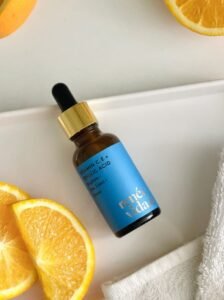
This article examines the scientific rationale behind a high-performance antioxidant serum formulated around a complementary network of Vitamin C (3-O-ethyl ascorbic acid), Vitamin E (d-alpha-tocopherol), and ferulic acid. The biochemical roles of these antioxidants are explored across aqueous and lipid phases of the skin, highlighting their synergistic interactions in mitigating environmentally induced oxidative burden. Particular attention is given to derivative selection, concentration logic, stability considerations, and the biological constraints of skin tolerance.
Beyond primary actives, the formulation incorporates a deliberate secondary ingredient architecture—including barrier-supportive botanicals, osmoprotective humectants, sebum-modulating minerals, and optimized excipient systems—to enhance delivery, reduce irritation risk, and support regimen compliance. Rather than serving as inert fillers, these components function as enablers of biological compatibility and sustained use.
Taken together, the formulation reflects a systems-based approach to skincare, in which efficacy, tolerability, and long-term performance are interdependent outcomes of coordinated design. This framework emphasizes formulation integrity over ingredient maximalism and positions antioxidant skincare as a biologically integrated interface rather than a collection of isolated claims.
Why Antioxidants Matter in Skin Biology
Human skin exists at the interface between the body and the external environment, where it is continuously exposed to ultraviolet radiation, air pollution, and environmental stressors capable of generating reactive oxygen species. These reactive molecules contribute to oxidative stress within the skin, a process that plays a central role in the visible signs of skin aging and uneven skin quality over time.
While the skin possesses its own intrinsic antioxidant defense systems, these reserves are finite and become progressively depleted with repeated environmental exposure. Modern lifestyles, urban pollution, and chronic ultraviolet exposure can overwhelm the skin’s natural protective capacity, accelerating oxidative damage to lipids, proteins, and structural components that maintain skin integrity. As this balance shifts, the skin becomes more vulnerable to collagen degradation, impaired barrier function, and irregular pigmentation.
Topical antioxidants are therefore used in skincare not as a replacement for the skin’s natural defenses, but as a means of reinforcing them. When applied directly to the skin, antioxidants can help neutralize reactive oxygen species at the site where damage occurs, supporting the skin’s ability to maintain structural resilience and recover from environmental stress.
Among topical antioxidant systems, combinations of complementary antioxidants have been shown to offer broader protective coverage than single ingredients alone. Water-soluble and lipid-soluble antioxidants operate in different compartments of the skin, and when thoughtfully combined, they can function as an integrated system rather than isolated actives. This systems-based approach forms the scientific foundation for formulations that pair vitamin C, vitamin E, and ferulic acid in contemporary antioxidant serums.
Skin Biology & Oxidative Stress
Human skin is a layered biological organ composed of the epidermis, dermis, and subcutaneous tissue, with the outer epidermal layers forming the primary interface between the body and the external environment. This anatomical position makes the skin uniquely vulnerable to environmental stressors such as ultraviolet (UV) radiation, visible light, air pollution, and particulate matter. Exposure to these factors leads to the generation of reactive oxygen species (ROS), including superoxide anions, hydroxyl radicals, and singlet oxygen within cutaneous tissues (Darr & Fridovich, 1994; Rinnerthaler et al., 2015).
Reactive oxygen species are a normal byproduct of cellular metabolism and participate in physiological signaling processes. However, excessive or repeated environmental exposure can overwhelm the skin’s endogenous antioxidant defense systems, resulting in oxidative stress—a state in which ROS generation exceeds the skin’s capacity for neutralization (Packer & Valacchi, 2002). This imbalance has broad biological consequences, as oxidative stress affects multiple structural and functional components of the skin simultaneously.
Lipids within cell membranes and within the intercellular lipid matrix of the stratum corneum are particularly susceptible to oxidative damage. Lipid peroxidation disrupts the organization and function of these lipids, compromising barrier integrity and contributing to increased transepidermal water loss (TEWL) (Thiele, Traber, & Packer, 1998). Barrier disruption not only affects hydration but also increases skin sensitivity to subsequent environmental insults, creating a cycle in which oxidative stress and impaired barrier function reinforce one another.
Oxidative stress also plays a central role in dermal structural degradation. Reactive oxygen species can directly oxidize structural proteins such as collagen and elastin or indirectly promote their breakdown through the activation of matrix metalloproteinases (MMPs), a family of enzymes responsible for extracellular matrix remodeling (Fisher et al., 2002; Sander et al., 2002). Chronic activation of these pathways contributes to the progressive loss of dermal firmness, reduced elasticity, and the appearance of fine lines and wrinkles associated with photoaging.
In addition to its effects on barrier integrity and dermal structure, oxidative stress influences pigmentation biology. Melanocytes are both generators and targets of oxidative stress, particularly following UV exposure. Reactive oxygen species participate in signaling pathways that regulate melanocyte activity and melanogenesis, and sustained oxidative burden has been associated with dysregulated pigment production and uneven pigmentation patterns, especially in chronically sun-exposed skin (Denat et al., 2014).
The skin is equipped with endogenous antioxidant defenses, including enzymatic systems and small-molecule antioxidants present within the epidermis and dermis. However, these antioxidant reserves are not static. In vivo studies have demonstrated that cutaneous antioxidant levels—particularly lipid-soluble antioxidants such as vitamin E—decline following ultraviolet exposure, leaving the skin temporarily more vulnerable to further oxidative damage (Thiele et al., 1998; Packer & Valacchi, 2002). With repeated environmental exposure and incomplete recovery, this depletion may become cumulative, providing a biological rationale for strategies aimed at supporting antioxidant replenishment at the skin surface.
Vitamin C in Skin – Deep Science
Vitamin C is among the most extensively investigated antioxidants in skin biology and cosmetic dermatology. Human skin maintains relatively high concentrations of vitamin C compared with many other tissues, reflecting its central role in antioxidant defense, dermal structural integrity, and regulation of oxidative stress–responsive signaling pathways (Pullar et al., 2017). However, these cutaneous reserves are not static. Ultraviolet radiation and environmental stressors rapidly deplete epidermal and dermal vitamin C levels, creating a biological rationale for topical replenishment in skincare formulations.
Cutaneous Roles of Vitamin C
Within the skin, vitamin C functions primarily as a water-soluble antioxidant, scavenging reactive oxygen species in the aqueous compartments of the epidermis and dermis. By reducing oxidative burden, vitamin C limits secondary oxidative damage to lipids, proteins, and nucleic acids, thereby supporting overall cellular homeostasis (Pullar et al., 2017). Beyond its antioxidant activity, vitamin C is an essential cofactor for prolyl and lysyl hydroxylase enzymes, which catalyze post-translational modifications necessary for collagen maturation and stabilization. These enzymatic processes are fundamental to maintaining dermal matrix organization and tensile strength (Telang, 2013).
Vitamin C is also involved in pathways relevant to pigmentation biology. Oxidative stress has been shown to influence melanocyte activity and melanogenic signaling, particularly under ultraviolet exposure. Antioxidants such as vitamin C can modulate these redox-sensitive pathways, contributing over time to a more even appearance of skin tone rather than acting as direct depigmenting agents (Denat et al., 2014; Pullar et al., 2017).
Transport, Availability, and Formulation Constraints
Vitamin C does not freely diffuse across the skin barrier. In viable epidermal layers, uptake of free ascorbic acid is mediated by sodium-dependent vitamin C transporters (SVCTs), and intracellular accumulation is subject to saturation limits (Pullar et al., 2017). These biological constraints have important formulation implications: increasing topical concentration beyond certain thresholds does not necessarily yield proportionally greater biological benefit and may increase irritation risk.
Unmodified L-ascorbic acid further presents significant formulation challenges. It is chemically unstable, readily oxidizing in the presence of light, oxygen, or heat, and typically requires highly acidic conditions to remain soluble and active. These requirements can compromise shelf life, cosmetic elegance, and tolerability, particularly at higher concentrations (Pinnell et al., 2001).
3-O-Ethyl Ascorbic Acid: Rationale and Evidence
3-O-ethyl ascorbic acid (EAA) is a chemically modified derivative of ascorbic acid developed to address the instability and tolerability limitations associated with unmodified vitamin C. Substitution at the third carbon position alters the molecule’s reactivity, increasing resistance to oxidative degradation while preserving the structural framework necessary for vitamin C–related biological activity once delivered into the skin (Iliopoulos et al., 2019).
Physicochemical characterization studies demonstrate that EAA exhibits greater stability under stress conditions than L-ascorbic acid and several phosphate-based derivatives, with reduced susceptibility to discoloration and degradation over time (Iliopoulos et al., 2019). These properties allow vitamin C activity to be preserved under real-world storage and usage conditions, which is a critical requirement for high-performance cosmetic formulations.
From a delivery perspective, EAA displays semi-polar physicochemical behavior, distinguishing it from highly hydrophilic derivatives such as sodium ascorbyl phosphate or magnesium ascorbyl phosphate, and from fully lipophilic derivatives. This semi-polar profile facilitates interaction with both aqueous and lipid domains of the stratum corneum, improving the likelihood of effective cutaneous uptake when appropriately formulated (Iliopoulos et al., 2019). Ex vivo skin models further suggest that EAA demonstrates more favorable delivery characteristics than phosphate-based derivatives, which rely heavily on enzymatic conversion at the skin surface and often show limited penetration beyond superficial layers.
Once delivered into the skin, ethylated vitamin C derivatives may undergo enzymatic conversion to free ascorbic acid, enabling participation in established antioxidant and collagen-related pathways (Pullar et al., 2017). Importantly, this conversion occurs after penetration rather than at the skin surface, which may contribute to improved tolerability compared with high-concentration L-ascorbic acid systems.
EAA also exhibits compatibility with moderately acidic to near-physiological pH ranges. Whereas L-ascorbic acid typically requires formulation pH values below approximately 3.5—conditions frequently associated with stinging and irritation—EAA remains stable and functional at pH levels closer to that of healthy skin (Iliopoulos et al., 2019). This improves suitability for daily use, including for individuals with sensitive or barrier-compromised skin.
Pigmentation Biology and Oxidative Signaling
Beyond its role as a general antioxidant, mechanistic studies indicate that EAA can influence melanogenesis under oxidative stress conditions. Cellular models have shown that EAA modulates redox-sensitive signaling pathways, including Nrf2-mediated responses and α-MSH–related signaling, in UVA-irradiated keratinocytes and melanocytes (Chen et al., 2021). These effects are consistent with the broader understanding that oxidative stress acts as an upstream regulator of melanocyte behavior, and that antioxidants can indirectly modulate pigmentation outcomes by restoring redox balance rather than directly inhibiting melanin synthesis.
Antioxidant Chemistry and Derivative Design
From a chemical standpoint, computational studies comparing vitamin C and its derivatives demonstrate that structural modification can influence intrinsic radical-scavenging behavior. Density functional theory analyses indicate that while some derivatives may exhibit slightly reduced theoretical antioxidant activity compared with free ascorbic acid, they often provide greater practical stability and usability in formulation contexts (Liu et al., 2020). This distinction underscores an important principle in cosmetic science: effective antioxidant performance depends not only on intrinsic reactivity, but also on the ability to deliver and maintain active species within the skin over time.
Clinical and Cosmetic Performance
Clinical and cosmetic evaluations of EAA-containing serums have demonstrated improvements in parameters associated with skin appearance, including firmness, elasticity, brightness, and overall tone, alongside favorable tolerability profiles (Zerbinati et al., 2021). More recent formulation-focused research has further shown that EAA performs well in comparative stability screening and clinical cosmetic assessment, supporting its suitability for high-performance antioxidant serums intended for regular use (Istiqomah et al., 2025).
Concentration Logic in Cosmetic Formulations
The biological effects of topical vitamin C are influenced by concentration, but concentration alone does not determine efficacy. Outcomes reflect the interaction between molecular form, formulation stability, penetration efficiency, and user tolerability. For EAA, cosmetic formulations span a wide concentration range, from low single-digit percentages used for general antioxidant support to higher-potency levels intended for targeted applications.
Lower concentrations of EAA can provide measurable antioxidant and tone-supporting benefits when used consistently. Higher concentrations are often selected in specialized serums to increase the amount of vitamin C available for conversion within the skin, while remaining within the tolerability limits afforded by the derivative’s enhanced stability profile (Zerbinati et al., 2021; Istiqomah et al., 2025).
In formulation practice, a concentration of approximately 15% 3-O-ethyl ascorbic acid is frequently chosen as a high-performance yet practical upper range. This choice is informed by several converging considerations. First, extensive literature on unmodified L-ascorbic acid has established that topical vitamin C demonstrates biological activity within the approximate range of 10–20%, beyond which efficacy plateaus while irritation risk increases (Pinnell et al., 2001). This range serves as a benchmark when designing vitamin C systems.
Second, unlike L-ascorbic acid—which becomes increasingly unstable and cosmetically impractical at higher concentrations—EAA demonstrates strong resistance to oxidation and degradation at elevated loadings, enabling formulation at higher percentages without rapid loss of functional integrity (Iliopoulos et al., 2019; Istiqomah et al., 2025).
Finally, tolerability considerations are central. Because EAA does not require extremely low pH conditions to remain stable or functional, higher-percentage formulations can be designed at skin-compatible pH levels. Clinical and cosmetic testing indicates that even high-loading EAA formulations can be well tolerated when appropriately formulated, supporting consistent long-term use (Zerbinati et al., 2021; Istiqomah et al., 2025).
Conflict of Interest Disclosure
Istiqomah et al. (2025) disclose affiliations with cosmetic research laboratories and formulation development entities. The findings are therefore interpreted within the context of cosmetic formulation and performance research rather than therapeutic evaluation.
Vitamin E in Skin – Lipid-Phase Antioxidant Science
Vitamin E plays a fundamentally different role in cutaneous antioxidant defense compared to water-soluble antioxidants such as vitamin C. In human skin, vitamin E—predominantly present as α-tocopherol—is localized within lipid-rich compartments, including epidermal cell membranes, sebaceous lipids, and the intercellular lipid matrix of the stratum corneum. This localization positions vitamin E as the skin’s primary lipid-phase antioxidant, responsible for protecting structural lipids from oxidative degradation induced by ultraviolet radiation and environmental stressors (Thiele et al., 1998; Thiele et al., 2005).
Vitamin E as the Dominant Lipid-Phase Antioxidant
Among the tocopherol and tocotrienol family, α-tocopherol is the quantitatively dominant and physiologically relevant form found in human skin. In vivo studies demonstrate that α-tocopherol is rapidly depleted following ultraviolet exposure, often preceding measurable lipid peroxidation or protein oxidation. This depletion has been described as an early and sensitive marker of photo-oxidative stress, highlighting the critical defensive role vitamin E plays within the epidermis (Thiele et al., 1998).
The preferential localization of α-tocopherol within lipid domains allows it to intercept reactive oxygen species at sites where oxidative damage would otherwise compromise membrane integrity and barrier function. This role cannot be fully substituted by aqueous-phase antioxidants, underscoring the importance of including lipid-phase protection within comprehensive antioxidant strategies (Thiele et al., 2001).
Chain-Breaking Activity and Lipid Peroxidation Control
The protective function of vitamin E is primarily mediated through its chain-breaking antioxidant activity. Lipid peroxidation is a self-propagating process initiated when reactive oxygen species attack polyunsaturated fatty acids within membrane phospholipids and surface lipids. Once initiated, this process can rapidly amplify oxidative damage across lipid structures.
α-Tocopherol interrupts this cascade by donating a hydrogen atom to lipid peroxyl radicals, thereby terminating the propagation phase of lipid peroxidation. In doing so, vitamin E prevents the spread of oxidative damage rather than merely neutralizing isolated reactive species (Nimse & Pal, 2015; Yoshida et al., 2003). This chain-terminating behavior distinguishes vitamin E from many other antioxidants and explains its central role in preserving the structural integrity of lipid-rich skin compartments.
Photoprotection: Experimental and Mechanistic Evidence
Although vitamin E is not a sunscreen and does not absorb ultraviolet radiation, multiple experimental studies demonstrate that topical α-tocopherol can modulate the biological consequences of UV exposure. In skin model systems, topical application of α-tocopherol has been shown to reduce ultraviolet-induced free radical formation, thereby attenuating downstream oxidative stress pathways (Jurkiewicz et al., 1995).
Further experimental work using animal and ex vivo skin models indicates that formulations containing α-tocopherol—particularly when combined with vitamin C—can reduce UV-induced cellular damage, including the formation of sunburn cells, a hallmark of keratinocyte apoptosis following UV injury (Lin et al., 2003). Importantly, these findings should be interpreted as experimental photoprotection, not as evidence of sunscreen equivalence or standalone UV defense in human clinical settings.
Barrier Integrity and Indirect Effects on Skin Hydration
Vitamin E contributes to skin barrier integrity indirectly by protecting epidermal lipids from oxidative degradation. This mechanism is consistent with earlier observations that oxidative damage to barrier lipids precedes measurable increases in transepidermal water loss, as discussed in the context of skin oxidative stress. Oxidative damage to barrier lipids disrupts their ordered arrangement, increasing permeability and compromising the skin’s ability to regulate transepidermal water loss (TEWL). By limiting lipid peroxidation, α-tocopherol helps preserve the functional architecture of the stratum corneum, supporting barrier resilience over time (Thiele et al., 2005; Azevedo Martins et al., 2020).
It is important to note that vitamin E does not function as a humectant and does not bind water directly. Improvements in skin comfort or perceived hydration associated with vitamin E use are best understood as secondary to barrier preservation rather than direct water-binding activity.
The Cutaneous Antioxidant Network
Vitamin E does not act in isolation within the skin. Instead, it participates in an interconnected antioxidant network spanning lipid and aqueous compartments. When α-tocopherol neutralizes lipid radicals, it is converted into a tocopheroxyl radical. This oxidized form can be reduced back to active α-tocopherol by water-soluble antioxidants, most notably vitamin C, thereby restoring lipid-phase antioxidant capacity (Thiele et al., 2001; Boo, 2022).
This recycling mechanism provides a biological rationale for combining vitamin E with vitamin C in topical formulations. Importantly, this interaction occurs within the skin, not within the cosmetic formulation itself, and supports sustained antioxidant activity across different skin compartments.
Form Selection: Free α-Tocopherol Versus Esterified Derivatives
Topical vitamin E may be delivered as free α-tocopherol or as esterified derivatives designed to improve formulation stability. Esterified forms require enzymatic hydrolysis within the skin to release active α-tocopherol. Experimental studies using human skin models demonstrate that this conversion process is variable and dependent on enzymatic activity, formulation context, and skin condition (Mavon et al., 2004; Ben-Shabat et al., 2013).
In contrast, free d-α-tocopherol represents the biologically active form already present in human skin and can participate directly in lipid-phase antioxidant defense without requiring prior enzymatic conversion.. While free α-tocopherol is more susceptible to oxidation in the formulation, its use aligns closely with physiological skin biology when supported by a complementary antioxidant system.
Concentration Logic in Cosmetic Formulations
In cosmetic dermatology, vitamin E is most commonly used in concentrations ranging from 0.5% to 1%, a range consistently reported in dermatologic reviews and commercial practice (Keen & Hassan, 2016). Concentrations below this range are often employed for formulation stabilization rather than biological impact within the skin.
Experimental studies evaluating topical α-tocopherol frequently employ concentrations around 1%, particularly in investigations of oxidative stress mitigation and photoprotection in model systems (Jurkiewicz et al., 1995; Lin et al., 2003). Safety assessments conducted by independent expert panels confirm that tocopherols are well tolerated in cosmetic formulations across commonly used concentration ranges, supporting their suitability for daily use (Fiume et al., 2018).
Taken together, the selection of 1% d-α-tocopherol reflects a balance between biological relevance, experimental precedent, tolerability, and compatibility with multi-antioxidant formulations, rather than an assertion of universal optimality.
Ferulic Acid – Network Stabilizer & Photoprotective Synergy
Ferulic acid occupies a distinct and often misunderstood position within topical antioxidant systems. While it is frequently grouped alongside vitamins C and E as a “triple antioxidant complex,” its primary function is neither to replace nor to mimic these vitamins. Instead, ferulic acid acts as a phenolic redox buffer and network stabilizer, extending the functional lifespan and photochemical resilience of the antioxidant system as a whole.
Chemically, ferulic acid is a hydroxycinnamic acid derivative with a conjugated phenolic structure that allows resonance stabilization of its phenoxyl radical following oxidation. This structural feature underlies its antioxidant capacity and explains why ferulic acid is particularly effective at modulating oxidative reactions rather than serving as a high-capacity radical scavenger in isolation (Graf, 1992).
Phenolic Antioxidant Chemistry and Redox Buffering
Unlike ascorbic acid or tocopherol, which are consumed stoichiometrically during antioxidant reactions, ferulic acid exhibits secondary antioxidant behavior, meaning it can slow or buffer oxidative cascades by stabilizing reactive intermediates. This property allows ferulic acid to reduce the rate at which primary antioxidants are depleted under oxidative stress (Graf, 1992; Srinivasan et al., 2007).
From a formulation and biological perspective, this redox buffering role is critical. In the absence of such modulation, antioxidant systems can become rapidly exhausted when exposed to ultraviolet radiation or environmental oxidants. Ferulic acid’s contribution, therefore, is best understood as protective and preservative, rather than directly reparative or outcome-driving.
Phenolic Antioxidant Chemistry and Redox Buffering
The most robust and frequently cited evidence supporting the inclusion of ferulic acid in antioxidant formulations comes from experimental work demonstrating its ability to enhance the photochemical stability of vitamins C and E. In a controlled study examining antioxidant solutions exposed to ultraviolet radiation, ferulic acid significantly reduced the degradation of both ascorbic acid and α-tocopherol, thereby preserving antioxidant activity under UV stress (Lin et al., 2005).
Importantly, this stabilization is asymmetric. Ferulic acid stabilizes vitamins C and E; the reverse is not observed. This distinction is essential for accurate scientific framing and avoids common misconceptions regarding mutual stabilization within antioxidant blends.
Experimental Photoprotection and Its Interpretation
When combined with vitamins C and E, ferulic acid has been shown to enhance experimental markers associated with photoprotection under controlled ultraviolet exposure, including reductions in UV-induced oxidative damage in skin model systems (Lin et al., 2005). The frequently cited phrase ‘doubling photoprotection’ originates from controlled experimental models measuring oxidative damage markers and refers specifically to relative changes in oxidative damage markers, not to clinical sun protection factors or sunscreen equivalence.
This distinction is critical. Ferulic acid does not absorb ultraviolet radiation in a manner comparable to UV filters, nor does it prevent UV exposure. Rather, its role is to mitigate downstream oxidative consequences once exposure has occurred, thereby supporting the skin’s endogenous defense mechanisms.
Interface Role Within the Antioxidant Network
One of ferulic acid’s most valuable attributes is its ability to function at the interface between aqueous and lipid antioxidant compartments. Vitamin C primarily operates in aqueous environments, while vitamin E protects lipid-rich domains. Ferulic acid’s phenolic structure and limited polarity allow partial interaction across aqueous–lipid interfaces, facilitating a more integrated antioxidant response (Graf, 1992; Jacobo-Velázquez, 2025).
This interface activity does not imply barrier repair or direct effects on transepidermal water loss. Instead, it reflects ferulic acid’s capacity to support coordinated antioxidant behavior across different biochemical environments within the skin.
Concentration Logic in Cosmetic Formulations
In cosmetic formulations, ferulic acid is typically used at concentrations around 0.5%, a level that balances efficacy, stability, and tolerability. At higher concentrations, ferulic acid’s inherent chemical instability becomes increasingly challenging to manage, particularly in aqueous systems. Experimental formulation studies demonstrate that ferulic acid is sensitive to pH, light, and oxidative conditions, necessitating careful formulation strategies to maintain activity (Das & Wong, 2020).
At cosmetic-use levels, ferulic acid’s contribution is therefore qualitative rather than quantitative. Its value lies in stabilizing and extending the activity of other antioxidants, not in delivering standalone biological effects such as collagen stimulation, wrinkle reduction, or pigment correction.
Clinical Context and Scope of Evidence
Systematic reviews of ferulic acid use in topical skincare consistently emphasize its role as an adjunctive component within multi-antioxidant systems rather than as an independent active with broad clinical effects (Roux et al., 2025). While improvements in skin appearance and resilience have been reported in formulations containing ferulic acid, these outcomes cannot be attributed to ferulic acid alone and should be interpreted within the context of combination antioxidant use.
Mechanistic studies have explored potential anti-inflammatory signaling effects in vitro of ferulic acid in vitro; however, current evidence does not support strong standalone clinical anti-inflammatory claims at cosmetic-use concentrations (Hong & Yoon, 2022). Accordingly, any discussion of anti-inflammatory activity must remain firmly within an experimental or mechanistic framework.
Ferulic Acid as a Systems Ingredient
Within a well-designed antioxidant formulation, ferulic acid functions as a systems ingredient—one that enhances durability, coordination, and resilience of the antioxidant network. Its importance lies not in outperforming vitamins C or E, but in enabling them to perform more consistently under oxidative stress, particularly in environments characterized by ultraviolet exposure.
This systems-oriented role aligns with the broader understanding of cutaneous antioxidant defense as an interconnected network rather than a collection of isolated actives, reinforcing the rationale for including ferulic acid as a stabilizing component within advanced antioxidant formulations.
Secondary Ingredients & Functional Support System
High-performance antioxidant formulations place meaningful biochemical and sensory demands on the skin. While Sections 3–5 addressed the primary antioxidant actives responsible for neutralizing oxidative stress and supporting photoprotection, the overall performance, tolerability, and long-term usability of the formulation are equally dependent on the supporting ingredient architecture.
In this formulation, secondary ingredients are selected with three explicit objectives: (1) to balance the formulation and reduce irritation risk, thereby supporting regimen compliance; (2) to enhance the functional expression and efficiency of the primary actives; and (3) to address secondary skin concerns commonly associated with oxidative stress exposure, such as barrier disruption, dehydration, and surface discomfort. Each ingredient is multifunctional, non-comedogenic, and supported by cosmetic or dermatological science. None are included as inert fillers or afterthoughts.
Barrier Support and Inflammation Modulation
Oxidative stress and environmental exposure can transiently impair barrier integrity and amplify low-grade inflammatory signaling, even in otherwise healthy skin. To mitigate these effects and improve tolerance to a high-active antioxidant system, the formulation incorporates Centella asiatica extract and Aloe vera extract as biological support components.
Centella asiatica has been widely studied for its ability to support barrier resilience and modulate inflammatory mediators in skin. Its triterpenoid constituents have been shown to influence fibroblast activity and reduce oxidative and inflammatory stress signaling without exerting pharmacological effects when used in cosmetic contexts (Park, 2021; Bylka et al., 2014). Within this formulation, Centella asiatica functions as a biological buffer, helping the skin adapt to sustained antioxidant exposure rather than acting as a therapeutic agent.
Aloe vera extract complements this role by providing soothing and hydration support. Its polysaccharide-rich composition has been shown to improve skin comfort and reduce irritation associated with environmental or formulation stressors (Surjushe et al., 2008). Together, these ingredients contribute to improved tolerability and user comfort, supporting consistent daily use.
Osmoprotection and Hydration Architecture
Cutaneous exposure to ultraviolet radiation and environmental pollutants is associated with increased transepidermal water loss and altered cellular water balance. Maintaining hydration under these conditions is not merely cosmetic; it supports barrier function and reduces secondary irritation that can compromise regimen adherence.
Natural betaine is included as an organic osmolyte that supports cellular water homeostasis. Osmolytes help skin cells adapt to osmotic stress without disrupting normal cellular function. Research demonstrates that osmolyte systems play a meaningful role in maintaining hydration balance, particularly in stressed or photoexposed skin (El-Chami et al., 2014; Foster et al., 2020). In this formulation, betaine supports hydration stability and reduces discomfort associated with environmental stress.
Saccharide isomerate and hyaluronic acid provide complementary humectant support. Saccharide isomerate binds to keratin within the stratum corneum, contributing to prolonged hydration and improved barrier comfort, while hyaluronic acid enhances surface hydration and supports viscoelastic properties associated with healthy skin appearance (Papakonstantinou et al., 2012; Rajkumar et al., 2023). These ingredients address secondary dryness and texture concerns often observed alongside oxidative damage.
Sebum Balance and Microbial Equilibrium
Oxidative stress can alter sebum composition and microbial balance at the skin surface, contributing to congestion and discomfort in some individuals. Zinc PCA is included to support sebum regulation and microbial equilibrium without compromising barrier integrity.
Zinc-containing compounds are well established in cosmetic science for their ability to modulate sebum activity and support cutaneous microbial balance while remaining compatible with sensitive skin types (Abendrot & Kalinowska-Lis, 2018). At cosmetic-use concentrations, zinc PCA functions as a supportive ingredient rather than a treatment, helping maintain surface balance and reducing the likelihood of secondary congestion.
Formulation Architecture, Stability, and Sensory Optimization
Beyond biological support, formulation architecture plays a critical role in ensuring consistent delivery, stability, and user compliance. Humectants such as glycerin, propanediol, and butylene glycol support hydration while also improving solubility and distribution of active ingredients. These excipients contribute to uniform application and reduce localized concentration effects that can increase irritation risk.
Film formers and rheology modifiers—including dimethicone, pullulan polymer, hydroxyethylcellulose, and xanthan gum—are incorporated to ensure formulation stability, controlled viscosity, and a smooth sensory profile. Dimethicone forms a breathable barrier that reduces transepidermal water loss and improves tactile comfort without occlusion, while polymeric components support even film formation and active dispersion (Madnani et al., 2024; Panwar & Rathore, 2024). These elements are essential for consistent performance rather than aesthetic enhancement alone.
Sodium gluconate functions as a chelating agent, binding trace metal ions that can catalyze oxidative degradation reactions. By supporting preservative efficacy and formulation stability, it indirectly contributes to the long-term performance of the antioxidant system (Uzdrowska & Górska-Ponikowska, 2023).
Preservation and Long-Term Use Integrity
Preservation is a necessary component of any leave-on cosmetic formulation and must balance microbial safety with skin compatibility. The preservation system in this formulation combines phenoxyethanol, ethylhexylglycerin, and 1,2-hexanediol to provide broad-spectrum protection at regulated, low-use levels.
Modern cosmetic safety assessments demonstrate that such combination systems effectively preserve formulations while minimizing irritation potential compared to higher concentrations of single preservatives (Juncan et al., 2024; Uzdrowska & Górska-Ponikowska, 2023). These ingredients are included not for consumer-facing claims but to ensure product integrity and safe, consistent use over time.
Integrated Role of Supporting Ingredients
Taken together, the secondary ingredients in this formulation form an integrated functional support system. They modulate barrier stress, stabilize hydration, optimize delivery, and preserve product integrity, enabling the primary antioxidant actives to perform effectively while maintaining skin comfort and compliance. This systems-based approach reflects a formulation philosophy in which efficacy, tolerance, and long-term usability are interdependent outcomes of deliberate ingredient selection.
A Systems-Based Formulation Philosophy
Skin biology operates as an interconnected system rather than a collection of isolated pathways. Oxidative stress, barrier integrity, hydration status, inflammatory signaling, and microbial balance are not independent variables; they influence one another continuously. For this reason, the formulation of an effective antioxidant serum cannot rely on a single “hero” ingredient or an additive stacking approach. Instead, it requires coordinated design across multiple functional domains.
As outlined in Sections 1 and 2, environmental stressors generate reactive oxygen species that affect lipids, proteins, and signaling pathways simultaneously. Sections 3 through 5 demonstrate how Vitamin C, Vitamin E, and ferulic acid function as complementary components of an antioxidant network, operating across aqueous and lipid compartments while reinforcing one another’s stability and activity. However, the efficacy of this network is ultimately constrained by the biological context in which it is delivered.
Section 6 addresses this constraint directly. Supporting ingredients are not included to dilute the formulation or soften claims; they exist to enable biological compatibility, delivery efficiency, and long-term usability. Barrier-supportive botanicals, osmoprotective humectants, and formulation stabilizers work together to reduce irritation risk, preserve hydration, and maintain sensory comfort under daily use. These functions are not cosmetic embellishments. They are prerequisites for sustained engagement with high-performance formulations.
A central principle of this formulation strategy is that compliance is a biological outcome, not merely a behavioral one. Skin that experiences repeated irritation, dehydration, or discomfort is less likely to tolerate continued use, regardless of theoretical efficacy. By addressing secondary stress responses—such as barrier disruption, dryness, or surface imbalance—the formulation supports consistent application, allowing the primary antioxidant system to function as intended over time.
Equally important is the principle of multifunctionality over redundancy. Each ingredient is selected to perform more than one role, whether biological, structural, or stabilizing. This reduces formulation complexity while increasing coherence. Rather than relying on excessive ingredient counts or overlapping actives, the formulation emphasizes coordinated function, where each component contributes to system-level performance.
This systems-based approach reflects a broader philosophy of formulation science: effective skincare is not defined solely by the potency of individual ingredients, but by how well those ingredients operate together within the constraints of skin biology. When antioxidant activity, barrier support, hydration architecture, and formulation stability are aligned, the result is not only measurable performance but also improved tolerance, usability, and long-term relevance.
In this context, the formulation should be understood not as a collection of ingredients, but as an integrated biological interface—designed to interact predictably with skin under real-world conditions. That design philosophy underpins every ingredient choice discussed throughout this article and defines the intent of the formulation as a whole.
Bibliography
- Abendrot, M., & Kalinowska-Lis, U. (2018). Zinc-containing compounds for personal care applications. International Journal of Cosmetic Science, 40(3), 319–327. Retrieved from https://doi.org/10.1111/ics.12463
- Azevedo Martins, T., Sales de Oliveira Pinto, C., Costa de Oliveira, A., Robles Velasco, M., Gorriti Guitiérrez, A., Cosquillo Rafael, M., . . . Retuerto-Figueroa, M. (2020). Contribution of Topical Antioxidants to Maintain Healthy Skin—A Review. Scientia Pharmaceutica, 88(2), 27. doi:https://doi.org/10.3390/scipharm88020027
- Ben-Shabat, S., Kazdan, Y., Beit-Yannai, E., & Sintov, A. (2013). Use of alpha-tocopherol esters for topical vitamin E treatment: evaluation of their skin permeation and metabolism. The Journal of pharmacy and pharmacology, 65(5), 652–658. doi:https://doi.org/10.1111/jphp.12027
- Bylka, W., Znajdek-Awiżeń, P., Studzińska-Sroka, E., Dańczak-Pazdrowska, A., & Brzezińska, M. (2014). Centella asiatica in dermatology: An overview. Phytotherapy Research, 28(8), 1117–1124. Retrieved from https://doi.org/10.1002/ptr.5110
- Chen, S.-J., Hseu, Y.-C., Gowrisankar, Y., Chung, Y.-T., Zhang, Y.-Z., Way, T.-D., & Yang, H.-L. (2021). The anti-melanogenic effects of 3-O-ethyl ascorbic acid via Nrf2-mediated α-MSH inhibition in UVA-irradiated keratinocytes and autophagy induction in melanocytes. Free Radical Biology and Medicine, 173, 151–169. doi:https://doi.org/10.1016/j.freeradbiomed.2021.07.030
- Darr, D., & Fridovich, I. (1994, May). Free radicals in cutaneous biology. The Journal of Investigative Dermatology, 102(5), 671–675. doi:10.1111/1523-1747.ep12374036
- Das, S., & Wong, A. (2020). Stabilization of ferulic acid in topical gel formulation via nanoencapsulation and pH optimization. Scientific Reports, 10, 12288. Retrieved from https://doi.org/10.1038/s41598-020-68732-6
- Denat, L., Kadekaro, A., Marrot, L., Leachman, S., & Abdel-Malek, Z. (2014). Melanocytes as instigators and victims of oxidative stress. The Journal of investigative dermatology, 134(6), 1512–1518. Retrieved from https://doi.org/10.1038/jid.2014.65
- El-Chami, C., Haslam, I., Steward, M., & O’Neill, C. (2014). Role of organic osmolytes in water homeostasis in skin. Experimental Dermatology, 23(7), 534–537. Retrieved from https://doi.org/10.1111/exd.12473
- Fisher, G., Kang, S., Varani, J., Bata-Csorgo, Z., Wan, Y., Datta, S., & Voorhees, J. (2002). Mechanisms of photoaging and chronological skin aging. Archives of dermatology, 138(11), 1462–1470. Retrieved from https://doi.org/10.1001/archderm.138.11.1462
- Fiume, M., Bergfeld, W., Belsito, D., & et al. (2018). Safety assessment of tocopherols and tocotrienols as used in cosmetics. International Journal of Toxicology, 37((2_suppl)), 61S-94S. doi:10.1177/1091581818794455
- Foster, A., El Chami, C., O’Neill, C., & Watson, R. (2020). Osmolyte transporter expression is reduced in photoaged human skin: Implications for skin hydration in aging. Aging Cell, 19(1), e13058. Retrieved from https://doi.org/10.1111/acel.13058
- Graf, E. (1992). Antioxidant potential of ferulic acid. Free Radical Biology and Medicine, 13(4), 435–448. Retrieved from https://doi.org/10.1016/0891-5849(92)90184-I
- Hong, S., & Yoon, M. (2022). A study on the antioxidant and anti-inflammatory activities of ferulic acid as a cosmetic material. Journal of Cosmetic Medicine, 6, 89–94. Retrieved from https://doi.org/10.25056/JCM.2022.6.2.89
- Iliopoulos, F., Sil, B., Moore, D., Lucas, R., & Lane, M. (2019). 3-O-ethyl-l-ascorbic acid: Characterisation and investigation of single solvent systems for delivery to the skin. International Journal of Pharmaceutics: X, 1. doi:https://doi.org/10.1016/j.ijpx.2019.100025
- Istiqomah, N., Nirwana, H., Mulya, S., & Fransisca, F. (2025). Development of a vitamin C derivative serum for pre-aging skin: Raw material screening, stability and clinical evaluation. Journal of Multidisciplinary Applied Natural Science, 5(3), 934–948. doi:https://doi.org/10.47352/jmans.2774-3047.292
- Jacobo-Velázquez, D. A. (2025). Ferulic acid: Mechanistic insights and multifaceted applications in metabolic syndrome, food preservation, and cosmetics. Molecules, 30(18), 3716. Retrieved from https://doi.org/10.3390/molecules30183716
- Juncan, A., Rus, L.-L., Morgovan, C., & Loghin, F. (2024). Evaluation of the safety of cosmetic ingredients and their skin compatibility through in silico and in vivo assessments of a newly developed eye serum. Toxics, 12(7), 451. Retrieved from https://doi.org/10.3390/toxics12070451
- Jurkiewicz, B., Bissett, D., & Buettner, G. (1995). Effect of topically applied tocopherol on ultraviolet radiation-mediated free radical damage in skin. Journal of Investigative Dermatology, 104(4), 484–488. Retrieved from https://doi.org/10.1111/1523-1747.ep12605921
- Keen, M., & Hassan, I. (2016). Vitamin E in dermatology. Indian Dermatology Online Journal, 7(4), 311–315. Retrieved from https://doi.org/10.4103/2229-5178.185494
- Lin, F., Lin, J., Gupta, R., Tournas, J., Burch, J., Selim, M., . . . Pinnell, S. (2005). Ferulic acid stabilizes a solution of vitamins C and E and doubles its photoprotection of skin. Journal of Investigative Dermatology, 125(4), 826–832. Retrieved from https://doi.org/10.1111/j.0022-202X.2005.23768.x
- Lin, J. Y., & et al. (2003). UV photoprotection by combination topical antioxidants vitamin C and vitamin E. Journal of the American Academy of Dermatology, 48(6), 866–874. Retrieved from https://doi.org/10.1067/mjd.2003.425
- Liu, Y., Liu, C., & Li, J. (2020). Comparison of vitamin C and its derivative antioxidant activity: Evaluated by using density functional theory. ACS Omega, 5(39), 25467–25475. doi:https://doi.org/10.1021/acsomega.0c04318
- Madnani, N., Deo, J., Dalal, K., Benjamin, B., Murthy, V., Hegde, R., & Shetty, T. (2024). Revitalizing the skin: Exploring the role of barrier repair moisturizers. Journal of Cosmetic Dermatology, 23, 1533–1540. Retrieved from https://doi.org/10.1111/jocd.16171
- Mavon, A., Raufast, V., & Redoulès, D. (2004). Skin absorption and metabolism of a new vitamin E prodrug, delta-tocopherol-glucoside: In vitro evaluation in human skin models. Journal of Controlled Release, 100(2), 221–231. Retrieved from https://doi.org/10.1016/j.jconrel.2004.08.012
- Nimse, S., & Pal, D. (2015). Free radicals, natural antioxidants, and their reaction mechanisms. RSC Advances, 5(35), 27986–28006. Retrieved from https://doi.org/10.1039/C4RA13315C
- Packer, L., & Valacchi, G. (2002). Antioxidants and the response of skin to oxidative stress: vitamin E as a key indicator. Skin pharmacology and applied skin physiology, 15(5), 282–290. Retrieved from https://doi.org/10.1159/000064531
- Panwar, A., & Rathore, P. (2024). Impact of formulation excipients on skin barrier functions: A review. International Journal of Pharmaceutical and Chemical Analysis, 11(1), 41-44. Retrieved from https://doi.org/10.18231/j.ijpca.2024.005
- Papakonstantinou, E., Roth, M., & Karakiulakis, G. (2012). Hyaluronic acid: A key molecule in skin aging. Dermato-Endocrinology,, 4(3), 253-258. Retrieved from https://doi.org/10.4161/derm.21923
- Park, K. S. (2021). Pharmacological effects of Centella asiatica on skin diseases: Evidence and possible mechanisms. Evidence-Based Complementary and Alternative Medicine, 2021, 5462633. Retrieved from https://doi.org/10.1155/2021/5462633
- Pinnell, S., Yang, H., Omar, M., Monteiro-Riviere, N., DeBuys, H., Walker, L., . . . Levine, M. (2001). Topical L-ascorbic acid: Percutaneous absorption studies. Dermatologic surgery : official publication for American Society for Dermatologic Surgery [et al.], 27(2), 137–142. doi:https://doi.org/10.1046/j.1524-4725.2001.00264.x
- Pullar, J., Carr, A., & Vissers, M. (2017). The roles of vitamin C in skin health. Nutrients, 9(8), 866. doi:https://doi.org/10.3390/nu9080866
- Quan, T., Qin, Z., Xia, W., Shao, Y., Voorhees, J., & Fisher, G. (2009). Matrix-degrading metalloproteinases in photoaging. The journal of investigative dermatology. Symposium proceedings, 14(1), 20–24. Retrieved from https://doi.org/10.1038/jidsymp.2009.8
- Rajkumar, J., Chandan, N., Lio, P., & Shi, V. (2023). The skin barrier and moisturization: Function, disruption, and mechanisms of repair. Skin Pharmacology and Physiology, 36(4), 174-185. Retrieved from https://doi.org/10.1159/000534136
- Rinnerthaler, M., Bischof, J., Streubel, M., Trost, A., & Richter, K. (2015). Oxidative stress in aging human skin. Biomolecules, 5(2), 545–589. Retrieved from https://doi.org/10.3390/biom5020545
- Roux, J., Horton, L., Babadjouni, A., Kincaid, C., & Mesinkovska, N. (2025). Ferulic acid use for skin applications: A systematic review. Journal of Clinical and Aesthetic Dermatology, 18(5), 38–42. Retrieved from https://pubmed.ncbi.nlm.nih.gov/40538529/
- Sander, C., Chang, H., Salzmann, S., Müller, C., Ekanayake-Mudiyanselage, S., Elsner, P., & Thiele, J. (2002). Photoaging is associated with protein oxidation in human skin in vivo. The Journal of investigative dermatology, 118(4), 618–625. Retrieved from https://doi.org/10.1046/j.1523-1747.2002.01708.x
- Srinivasan, M., Sudheer, A., & Menon, V. (2007). Ferulic acid: Therapeutic potential through its antioxidant property. Journal of Clinical Biochemistry and Nutrition, 40(2), 92–100. Retrieved from https://doi.org/10.3164/jcbn.40.92
- Surjushe, A., Vasani, R., & Saple, D. (2008). Aloe vera: A short review. Indian Journal of Dermatology, 53(4), 163-166. Retrieved from https://doi.org/10.4103/0019-5154.44785
- Telang, P. (2013). Vitamin C in dermatology. Indian Dermatology Online Journal, 4(2), 143–146. doi:https://doi.org/10.4103/2229-5178.110593
- Thiele, J., & Ekanayake-Mudiyanselage, S. (2007). Vitamin E in human skin: organ-specific physiology and considerations for its use in dermatology. Molecular aspects of medicine, 646–667. Retrieved from https://doi.org/10.1016/j.mam.2007.06.001
- Thiele, J., Traber, M., & Packer, L. (1998). Depletion of human stratum corneum vitamin E: an early and sensitive in vivo marker of UV induced photo-oxidation. The Journal of investigative dermatology, 110(5), 756–761. Retrieved from https://doi.org/10.1046/j.1523-1747.1998.00169.x
- Uzdrowska, K., & Górska-Ponikowska, M. (2023). Preservatives in cosmetics technology. Aesthetic Cosmetology and Medicine, 12, 73-78. Retrieved from https://doi.org/10.52336/acm.2023.008
- Yoshida, Y., Niki, E., & Noguchi, N. (2003). Comparative study on the action of tocopherols and tocotrienols as antioxidant: Chemical and physical effects. Chemistry and Physics of Lipids, 123(1), 63–75. Retrieved from https://doi.org/10.1016/S0009-3084(02)00164-0
Zerbinati, N., Sommatis, S., Maccario, C., Di Francesco, S., Capillo, M., Rauso, R., . . . Mocchi, R. (2021). The Anti-Ageing and Whitening Potential of a Cosmetic Serum Containing 3-O-ethyl-l-ascorbic Acid. Life, 11(5), 406. doi:https://doi.org/10.3390/life11050406
CATEGORIES
- The Routine Lab
- Skin Stories
- Skin Health & Lifestyle
- Skin Concerns
- Seasonal Issues
- Product Science
- Product Deep Dives