
Designing an Antioxidant Serum for Daily, Long-Term Use
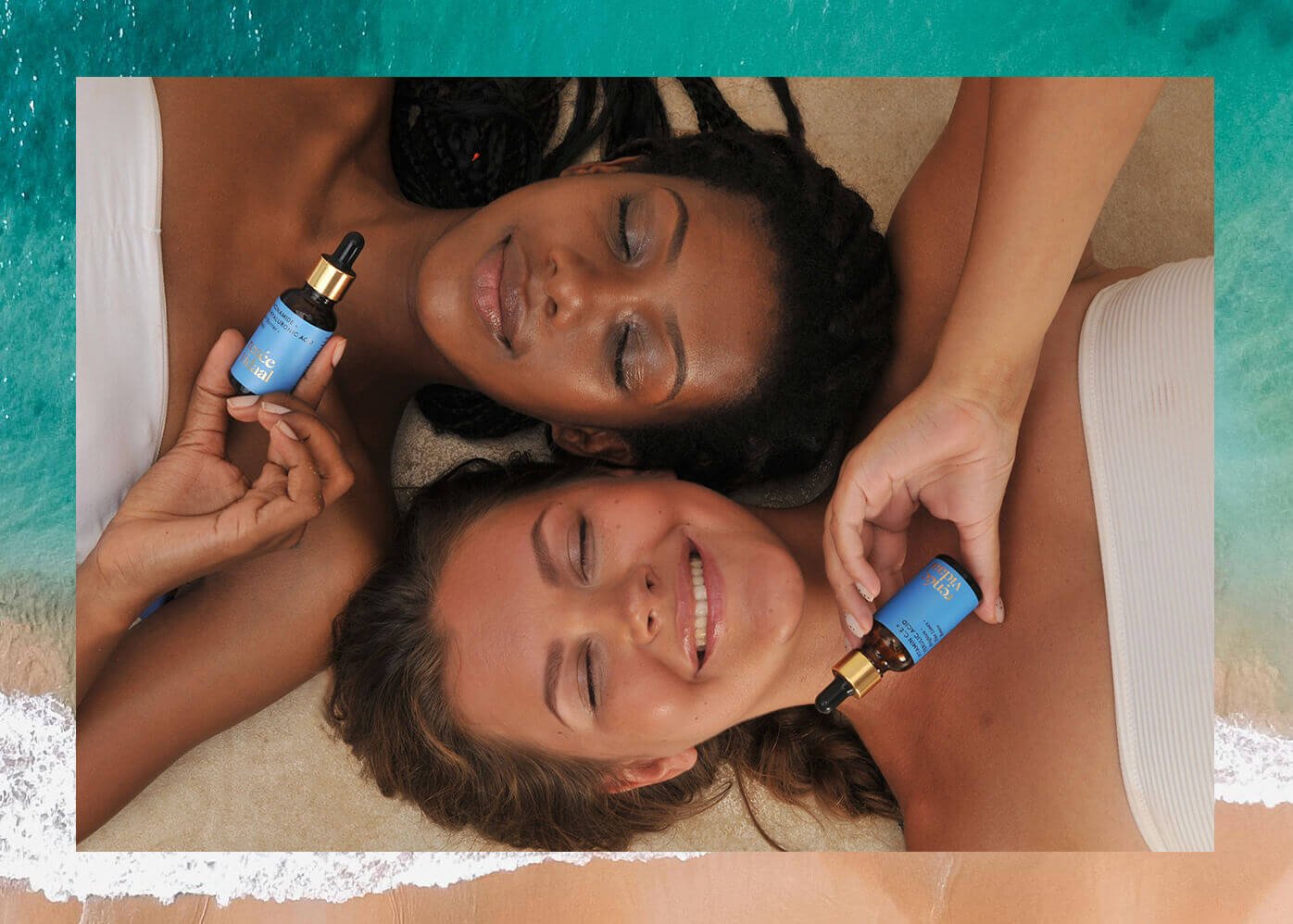
This article is intended for educational purposes and does not replace
professional dermatological advice.
TL;DR
Antioxidant serums are most effective when they are designed for consistent, long-term use, not short-term intensity. Skin is exposed to oxidative stress daily, and its natural antioxidant defenses are finite and repeatedly depleted. For topical antioxidants to meaningfully support skin biology, formulations must align with this reality.
This means prioritising stability, tolerability, and system balance over maximum concentration. Vitamin C effectiveness is limited by biological transport and formulation constraints, making stable, well-tolerated forms more suitable for daily use. Vitamin E complements this by protecting lipid-rich skin compartments, while ferulic acid functions as a system stabiliser that improves antioxidant durability rather than acting as a standalone active.
Supporting ingredients—such as barrier-conditioning agents, osmolytes, and formulation stabilisers—play a critical role in enabling regular use without irritation. Ultimately, antioxidant skincare works best as a coordinated system, designed to be used comfortably and repeatedly over time, reflecting how skin actually interacts with environmental stress in the real world.
Introduction
Antioxidant serums are often discussed in terms of ingredient strength or headline percentages. In practice, their real-world performance depends far more on how they are designed to be used over time. Skin is exposed to environmental stressors daily, not episodically, and any cosmetic strategy intended to support skin resilience must reflect this biological reality.
Designing an antioxidant serum for daily, long-term use is therefore a formulation challenge rather than a marketing one. It requires balancing chemical stability, skin tolerability, and compatibility with repeated application across varying environments and skin states. A formulation that is theoretically potent but difficult to use consistently does not align with skin biology or real-world skincare behavior.
This article explores the principles that guide the design of antioxidant serums intended for regular use. Rather than focusing on individual “hero” ingredients, it examines how formulation choices—ingredient form, system balance, and supportive components—shape whether an antioxidant serum can be used comfortably and reliably over time.
Why Antioxidant Skincare Must Be Designed for Consistency
Human skin is continuously exposed to environmental factors that generate reactive oxygen species (ROS), including ultraviolet (UV) radiation, atmospheric pollution, and other environmental stressors (Darr & Fridovich, 1994; Rinnerthaler et al., 2015). The formation of ROS is a normal consequence of environmental interaction, but repeated exposure can exceed the skin’s capacity to neutralise these species, contributing to oxidative stress.
The skin possesses intrinsic antioxidant defence systems composed of enzymatic pathways and small-molecule antioxidants distributed across aqueous and lipid compartments (Packer & Valacchi, 2002). These systems are not static. Experimental observations demonstrate that key cutaneous antioxidants are depleted following UV exposure, particularly in the stratum corneum and upper epidermis, indicating active consumption during environmental stress rather than permanent availability (Thiele et al., 1998).
Oxidative stress is therefore cumulative rather than episodic. Repeated oxidative exposure has been associated with biological pathways involved in collagen degradation, barrier lipid oxidation, and altered pigmentation signalling, all of which contribute to gradual changes in visible skin quality over time (Fisher et al., 2002; Sander et al., 2002). This reinforces the concept that oxidative damage develops through chronic exposure rather than isolated environmental insults.
From a cosmetic formulation perspective, this biology has direct implications. Topical antioxidants are not intended to replace endogenous defence mechanisms, but to support them by helping replenish antioxidant capacity at the skin surface (Packer & Valacchi, 2002). For such support to be relevant, it must be provided consistently. Intermittent application does not reflect the continuous nature of environmental exposure or antioxidant depletion.
Consistency therefore becomes a foundational design requirement rather than a behavioural afterthought. Stability, tolerability, and skin compatibility influence whether an antioxidant serum can be used repeatedly over time. A formulation designed to support daily use is better aligned with skin biology than one optimised solely for short-term activity, regardless of its theoretical potency.
Potency Alone Does Not Define Effectiveness
In antioxidant skincare, ingredient concentration is often assumed to be directly proportional to effectiveness. From a biological and formulation perspective, however, this relationship is constrained by physiological limits within the skin and by the practical realities of repeated topical use.
Vitamin C provides a clear illustration of these constraints. Cutaneous uptake of vitamin C is mediated by specific sodium-dependent transporters and exhibits saturable kinetics, meaning that cellular absorption does not increase indefinitely with rising topical concentration (Pullar et al., 2017). Once transporter capacity is approached, additional applied vitamin C does not proportionally increase intracellular availability. This places a biological ceiling on the extent to which escalating concentrations can enhance antioxidant capacity within the skin.
Formulation factors further complicate the equation. High concentrations of chemically unstable antioxidants often require formulation conditions that increase the likelihood of skin discomfort. In the case of unmodified L-ascorbic acid, low pH environments are commonly used to improve penetration and stability, but these same conditions may compromise tolerability when products are used daily (Pinnell et al., 2001). When discomfort or irritation occurs, consistency of use is often reduced.
Cosmetic and dermatologic literature consistently indicates that reduced tolerability negatively influences adherence to skincare routines. Irritation, barrier stress, and sensory discomfort are among the most common reasons for decreased frequency of use or product discontinuation (Azevedo Martins et al., 2020; Madnani et al., 2024). In such cases, high nominal potency does not translate into sustained cosmetic relevance.
Practical effectiveness in daily-use antioxidant skincare therefore reflects a balance rather than a maximum. It emerges from aligning biological uptake limits, formulation stability, and skin compatibility in a way that supports repeated application. A formulation designed within these constraints is more likely to be used consistently and, as a result, better positioned to support the skin’s antioxidant environment over time than one optimised solely around concentration.
Designing Vitamin C for Daily Use: Form, Stability, and Tolerance
Vitamin C plays a central role in skin biology as a water-soluble antioxidant and as a cofactor involved in processes related to collagen synthesis and oxidative balance (Pullar et al., 2017). Despite its biological relevance, effective topical delivery of vitamin C presents formulation challenges that extend beyond ingredient concentration alone.
Transport of vitamin C into skin cells is biologically regulated and mediated by specific sodium-dependent transporters. This process exhibits saturable kinetics, meaning that once transporter capacity is approached, increasing topical concentration does not proportionally increase intracellular vitamin C levels (Pullar et al., 2017). As a result, escalating dose alone does not guarantee greater biological availability within the skin.
Chemical stability is a further limiting factor. Unmodified L-ascorbic acid is inherently unstable in aqueous systems and readily undergoes oxidative degradation when exposed to light, heat, or oxygen (Pinnell et al., 2001). To improve penetration and stability, formulations often rely on low pH environments. While this approach can enhance delivery, acidic conditions may compromise skin tolerability when products are intended for daily, long-term use (Pinnell et al., 2001).
These constraints have led to the development and use of vitamin C derivatives designed to improve formulation robustness. 3-O-ethyl ascorbic acid demonstrates greater chemical stability under cosmetic formulation conditions compared with L-ascorbic acid, allowing formulation at more moderate pH ranges that are generally more compatible with repeated use (Iliopoulos et al., 2019). From a formulation perspective, this improves overall usability without relying on highly acidic systems.
Experimental and cosmetic research suggests that ethylated vitamin C derivatives may undergo partial conversion to ascorbic acid within biological systems, although this behavior has been demonstrated primarily in experimental models rather than conclusively established in vivo (Iliopoulos et al., 2019; Zerbinati et al., 2021). Accordingly, claims surrounding such derivatives are best framed conservatively, focusing on improved stability and tolerability rather than guaranteed biological conversion.
Designing vitamin C for daily use therefore requires prioritising form selection alongside concentration. A stable, well-tolerated vitamin C derivative that supports regular application is more closely aligned with long-term cosmetic use than an unstable or irritating system optimised for short-term intensity.
Lipid-Phase Protection and the Role of Vitamin E
Effective antioxidant design must account for both aqueous and lipid compartments of the skin. The stratum corneum and intercellular lipid matrix are particularly susceptible to oxidative damage due to their high content of unsaturated fatty acids, which are prone to peroxidation under environmental stress (Thiele et al., 2005). Within these lipid-rich structures, vitamin E—primarily in the form of α-tocopherol—serves as the dominant lipid-phase antioxidant in human skin (Thiele et al., 1998).
α-Tocopherol is naturally present within epidermal lipids and cell membranes, where it functions as a chain-breaking antioxidant. By donating a hydrogen atom to lipid radicals, vitamin E interrupts lipid peroxidation reactions that would otherwise propagate oxidative damage across membrane structures (Jurkiewicz et al., 1995; Yoshida et al., 2003). This role is distinct from that of water-soluble antioxidants, which primarily operate within aqueous compartments.
Environmental exposure has a measurable impact on cutaneous vitamin E levels. Experimental studies have shown that ultraviolet radiation leads to rapid depletion of α-tocopherol in the stratum corneum, often preceding other detectable markers of oxidative damage (Thiele et al., 1998). This depletion highlights the vulnerability of lipid-phase antioxidant defenses under routine environmental conditions and underscores the relevance of replenishment strategies designed for regular use.
Oxidative damage to barrier lipids has functional consequences for skin performance. Lipid peroxidation can disrupt barrier organization and increase susceptibility to environmental stressors, contributing to compromised barrier resilience over time (Thiele et al., 2005; Azevedo Martins et al., 2020). In this context, vitamin E’s role is supportive rather than corrective. It does not function as a humectant or a direct barrier repair agent; instead, it helps limit oxidative degradation of existing lipids.
From a formulation perspective, the form of vitamin E is relevant. Free α-tocopherol corresponds to the biologically active form present in skin and is therefore commonly used in topical formulations intended to support lipid-phase antioxidant capacity (Mavon et al., 2004; Ben-Shabat et al., 2013). When incorporated alongside water-soluble antioxidants, vitamin E contributes to broader compartmental coverage that more closely reflects skin biology than single-phase antioxidant systems.
Ferulic Acid and System Durability
Within antioxidant formulations, ferulic acid is frequently positioned as a primary or “hero” ingredient. From a cosmetic science perspective, however, its principal value lies in its role as a secondary antioxidant that supports the stability and durability of broader antioxidant systems rather than driving standalone biological effects (Graf, 1992).
Chemically, ferulic acid is a phenolic compound capable of participating in redox reactions that modulate oxidative cascades. By donating a hydrogen atom and forming a resonance-stabilized phenoxyl radical, ferulic acid functions as a redox buffer within antioxidant networks, helping limit the propagation of oxidative reactions rather than acting as an isolated scavenger (Graf, 1992; Srinivasan et al., 2007).
Experimental studies have demonstrated that ferulic acid can enhance the photochemical stability of vitamins C and E when these antioxidants are exposed to ultraviolet radiation (Lin et al., 2005). In these systems, ferulic acid reduces oxidative degradation of the primary antioxidants, extending their functional lifespan under UV stress. Importantly, these observations relate to relative changes in oxidative damage markers under controlled conditions rather than to clinical photoprotection outcomes.
This distinction is critical for compliant cosmetic communication. References to enhanced “photoprotection” in the context of ferulic acid–containing antioxidant systems describe reductions in UV-induced oxidative markers, not an increase in sun protection factor or replacement of UV filters (Lin et al., 2005). Ferulic acid does not absorb UV radiation in a manner comparable to sunscreens and should not be positioned as a substitute for photoprotective products.
From a formulation design standpoint, ferulic acid contributes to antioxidant system durability. By stabilizing more reactive antioxidants and moderating redox cycling, it helps maintain overall system performance during repeated environmental exposure (Graf, 1992; Roux et al., 2025). This system-supportive role aligns with the requirements of daily-use antioxidant formulations, where ingredients are exposed to light, oxygen, and temperature fluctuations over time.
In long-term antioxidant skincare, ferulic acid should therefore be understood as an enabling component rather than a primary driver of activity. Its inclusion reflects a formulation strategy focused on sustained performance and consistency, reinforcing the principle that antioxidant efficacy emerges from coordinated ingredient behavior rather than isolated actives.
Supporting Ingredients That Enable Long-Term Use
Active antioxidant systems can place functional demands on the skin when used repeatedly, particularly under conditions of environmental stress. Cosmetic and dermatologic literature indicates that concentrated or multi-active formulations may increase the likelihood of transient irritation or barrier stress if not appropriately supported, which can compromise long-term usability (Madnani et al., 2024).
Barrier-supportive formulation strategies are therefore central to daily-use antioxidant design. Supporting the skin barrier has been shown to improve tolerability and sensory comfort, which in turn influences whether products can be used consistently over time (Rajkumar et al., 2023). This approach does not alter the primary antioxidant function of the formulation but creates conditions that allow active systems to be applied repeatedly without provoking discomfort.
Botanical components such as Centella asiatica are frequently incorporated for their skin-conditioning and barrier-supportive properties. Cosmetic research describes Centella extracts as contributing to improved barrier function and skin comfort without positioning them as therapeutic agents (Bylka et al., 2014; Park, 2021). Within antioxidant formulations, such ingredients function as supportive components rather than primary actives.
Aloe vera is similarly included for its role in maintaining skin comfort. Dermatologic and cosmetic literature associates aloe with reduced perception of irritation and improved skin conditioning when used in topical formulations, particularly those containing active ingredients (Surjushe et al., 2008). Its inclusion supports regular use by improving sensory acceptance rather than by altering antioxidant activity.
Osmolytes such as betaine contribute to hydration management under environmental stress. These small molecules help maintain cellular water balance and mitigate dehydration-related stress responses, especially under conditions of heat, UV exposure, or low humidity (El-Chami et al., 2014; Foster et al., 2020). Humectants further support surface hydration and improve formulation spreadability and feel.
Additional formulation infrastructure plays a critical role in long-term usability. Zinc PCA is commonly used to support surface balance and cosmetic compatibility, while chelating agents reduce oxidative degradation by binding trace metals that can catalyse oxidation reactions (Abendrot & Kalinowska-Lis, 2018; Uzdrowska & Górska-Ponikowska, 2023). Modern preservation systems help maintain product integrity throughout the intended use period without compromising skin compatibility (Juncan et al., 2024).
Collectively, these supporting ingredients do not function as primary antioxidants. Instead, they enable consistency by improving tolerability, stability, and sensory acceptance. In daily-use antioxidant formulations, such support systems are key determinants of whether antioxidant activity can be sustained through regular, long-term application.
Long-Term Use as a Biological Outcome, Not a Habit
Continuity of use in skincare is often framed as a matter of user discipline or routine adherence. From a biological and formulation perspective, however, long-term use is strongly influenced by how skin responds to repeated application. Skin tolerance is therefore a functional determinant of consistency rather than a secondary behavioural factor.
Cutaneous tolerance is shaped by barrier integrity, inflammatory responsiveness, and sensory perception. When formulations disrupt the skin barrier or provoke irritation—even transiently—the likelihood of reduced frequency of use or discontinuation increases (Madnani et al., 2024). This relationship is particularly relevant for antioxidant systems, which are intended to be applied regularly to support ongoing environmental exposure rather than to deliver episodic effects.
Cosmetic and dermatologic literature consistently identifies irritation, barrier stress, and discomfort as primary contributors to reduced adherence to skincare regimens (Azevedo Martins et al., 2020). When products are perceived as aggressive or destabilising to the skin, users often modify application frequency or abandon use altogether. In such cases, theoretical formulation activity does not translate into sustained cosmetic relevance.
From a biological standpoint, consistency of use influences cumulative cosmetic outcomes. Antioxidant depletion following ultraviolet exposure and environmental stress occurs repeatedly, and support of the skin’s antioxidant environment depends on regular replenishment rather than intermittent application (Thiele et al., 1998). A formulation that cannot be tolerated consistently cannot align with this biology, regardless of ingredient composition.
Long-term usability should therefore be understood as a biological outcome of formulation design. Stability, tolerability, and sensory compatibility determine whether a product can be integrated into daily routines without provoking barrier stress. When these parameters are met, continued use becomes a natural extension of skin comfort rather than a forced habit..
A Systems-Based Approach to Daily Antioxidant Skincare
Continuity of use in skincare is often framed as a matter of user discipline or routine adherence. From a
Antioxidant activity in human skin operates as an interconnected network rather than as isolated molecular events. Cutaneous defense against oxidative stress involves coordinated interactions between aqueous-phase antioxidants, lipid-phase antioxidants, and enzymatic systems distributed across different skin compartments (Thiele et al., 2001). From a formulation perspective, this biology supports a systems-based approach to antioxidant skincare rather than reliance on individual, high-impact ingredients.
Water-soluble antioxidants such as vitamin C primarily function within aqueous environments, while lipid-phase antioxidants such as vitamin E protect membrane and barrier lipids. Secondary antioxidants and stabilising compounds contribute by modulating redox cycling and limiting oxidative propagation within the system (Graf, 1992). When these components are combined thoughtfully, they more closely reflect the compartmental organisation of skin biology than formulations designed around single-actives.
System-level design also addresses the practical realities of daily use. Antioxidant formulations intended for regular application must remain chemically stable, tolerable, and compatible with the skin barrier across varying environmental conditions, including changes in ultraviolet exposure, temperature, and pollution burden. Cosmetic science literature consistently emphasises that long-term performance depends not only on molecular activity, but on whether coordinated ingredient systems can maintain functionality over time without provoking irritation or instability (Azevedo Martins et al., 2020).
This perspective challenges the concept of “hero ingredients” as the primary drivers of cosmetic effectiveness. While individual antioxidants play defined biological roles, their performance in topical formulations is shaped by formulation context, complementary components, and system durability. Isolated potency does not account for degradation, compartmental limitations, or the need for repeated application under real-world conditions (Pullar et al., 2017).
A systems-based approach therefore aligns formulation strategy with skin biology. By integrating antioxidants that operate across different compartments and supporting them with stabilising and barrier-compatible components, daily-use formulations can better support the skin’s natural defense architecture. In this way, antioxidant skincare becomes less about short-term intensity and more about sustained cosmetic support through consistent, long-term use.
biological and formulation perspective, however, long-term use is strongly influenced by how skin responds to repeated application. Skin tolerance is therefore a functional determinant of consistency rather than a secondary behavioural factor.
Cutaneous tolerance is shaped by barrier integrity, inflammatory responsiveness, and sensory perception. When formulations disrupt the skin barrier or provoke irritation—even transiently—the likelihood of reduced frequency of use or discontinuation increases (Madnani et al., 2024). This relationship is particularly relevant for antioxidant systems, which are intended to be applied regularly to support ongoing environmental exposure rather than to deliver episodic effects.
Cosmetic and dermatologic literature consistently identifies irritation, barrier stress, and discomfort as primary contributors to reduced adherence to skincare regimens (Azevedo Martins et al., 2020). When products are perceived as aggressive or destabilising to the skin, users often modify application frequency or abandon use altogether. In such cases, theoretical formulation activity does not translate into sustained cosmetic relevance.
From a biological standpoint, consistency of use influences cumulative cosmetic outcomes. Antioxidant depletion following ultraviolet exposure and environmental stress occurs repeatedly, and support of the skin’s antioxidant environment depends on regular replenishment rather than intermittent application (Thiele et al., 1998). A formulation that cannot be tolerated consistently cannot align with this biology, regardless of ingredient composition.
Long-term usability should therefore be understood as a biological outcome of formulation design. Stability, tolerability, and sensory compatibility determine whether a product can be integrated into daily routines without provoking barrier stress. When these parameters are met, continued use becomes a natural extension of skin comfort rather than a forced habit..
References
- Abendrot, M., & Kalinowska-Lis, U. (2018). Zinc compounds in cosmetics: Properties and applications. Cosmetics, 5(1), 16.
- Azevedo Martins, A. K., D’Almeida, V., & Maia Campos, P. M. B. G. (2020). Skin tolerability and cosmetic formulation strategies for active ingredients. Journal of Cosmetic Dermatology, 19(9), 2231–2239.
- Ben-Shabat, S., Baruch, N., Sintov, A. C., & Padan, E. (2013). Topical delivery of vitamin E and its derivatives: Biological relevance and formulation considerations. Journal of Drug Delivery Science and Technology, 23(1), 85–93.
- Bylka, W., Znajdek-Awizen, P., Studzińska-Sroka, E., Brzezińska, M., & Centkowski, M. (2014). Centella asiatica in cosmetology and dermatology. Postępy Dermatologii i Alergologii, 31(1), 46–49.
- Darr, D., & Fridovich, I. (1994). Free radicals in cutaneous biology. Journal of Investigative Dermatology, 102(5), 671–675.
- El-Chami, C., Haslam, I. S., Steward, M. C., & O’Neill, C. A. (2014). Role of organic osmolytes in maintaining skin hydration. British Journal of Dermatology, 171(Suppl 3), 37–42.
- Fisher, G. J., Kang, S., Varani, J., Bata-Csorgo, Z., Wan, Y., Datta, S., & Voorhees, J. J. (2002). Mechanisms of photoaging and chronological skin aging. Archives of Dermatology, 138(11), 1462–1470.
CATEGORIES
- The Routine Lab
- Skin Stories
- Skin Health & Lifestyle
- Skin Concerns
- Seasonal Issues
- Product Science
- Product Deep Dives