
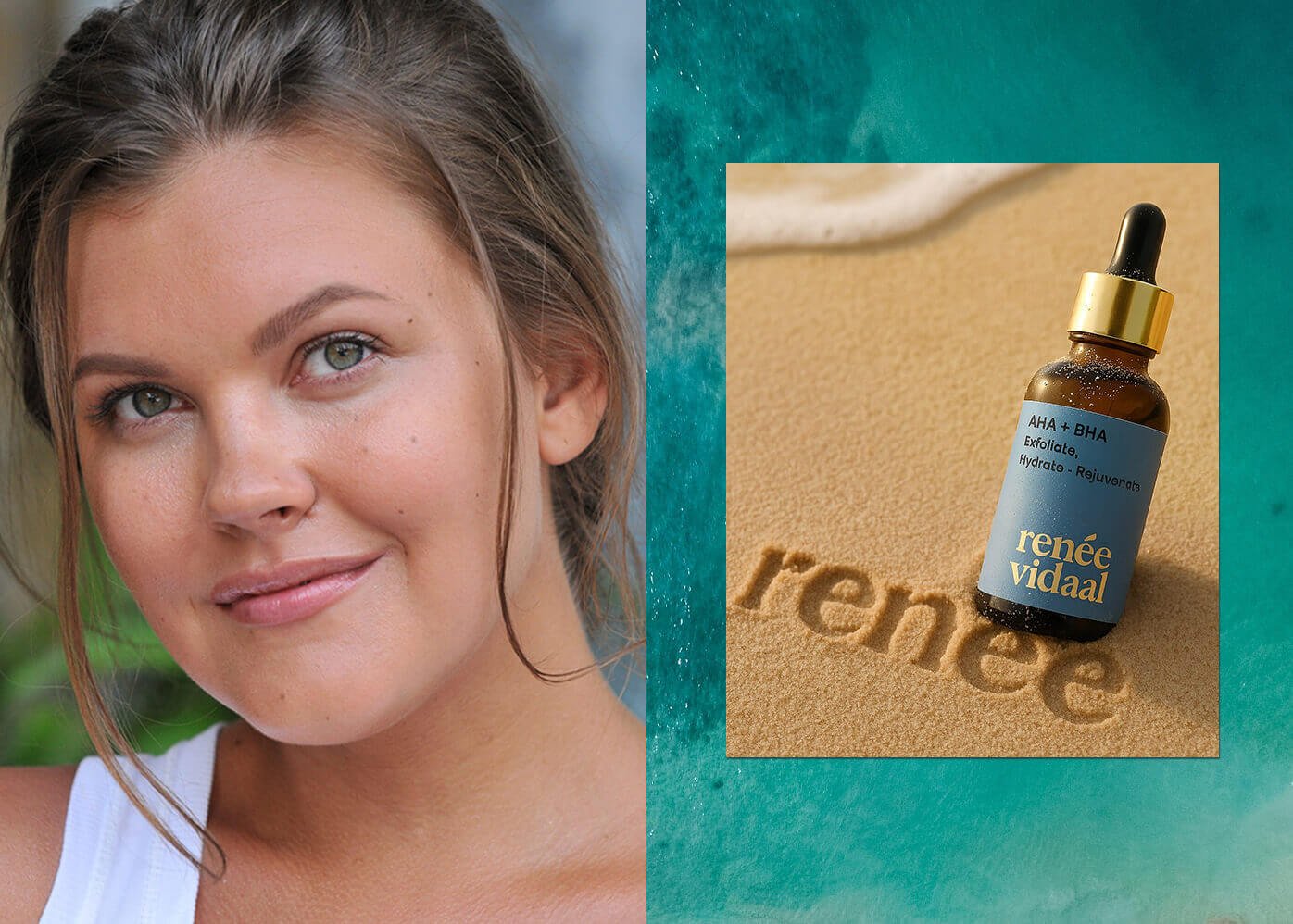
The Powerhouse Duo – Niacinamide & Hyaluronic Acid for Glowing Skin
Having glowing, youthful skin is a constant endeavor but it can be difficult to keep up with the ever evolving trends and fads in the skincare product industry. Niacinamide and hyaluronic acid, which are revered by dermatologist and beauty aficionados alike, are a constant in this rapidly changing landscape.
Niacinamide, which is Vitamin B3, is a water-soluble wonder molecule naturally found in yeast, meat, and green vegetables
[i]. Decades of scientific research have unveiled its impressive versatility in skincare and its efficacy in addressing diverse concerns, from acne and hyperpigmentation to fine lines and wrinkles
[ii]. Hyaluronic Acid, a naturally occurring polysaccharide present in our skin, is amazing at drawing moisture into the skin. Holding up to 1,000 times its weight in water, it plumps and smooths the skin’s surface, contributing to a youthful, dewy appearance
[iii]. While individually both molecules are superstars, the true magic unfolds when these hero molecules are used together. Niacinamide and Hyaluronic Acid offer synergistic benefits, amplifying their individual effects
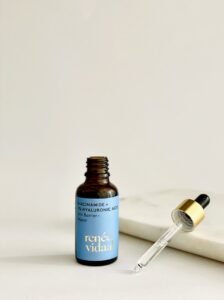
[iv].This blog delves deeper into the science behind this powerhouse duo, unraveling their individual wonders and exploring how they synergistically unlock a new level of radiant skin. We’ll also talk about our unique product formulated with these hero ingredients, empowering you to experience their transformative potential firsthand.
[i] Ganceviciene, R., Iwaniuk, J., & Inkielewicz-Stepniewska, I. (2018). The role of niacinamide in skin rejuvenation. Postepy Dermatologii i Alergologii, 35(6), 471-477.
[ii] Ghodami, F., et al. (2017). The effect of topical niacinamide on the management of moderate acne vulgaris: a double-blind, randomized, controlled trial. Journal of Clinical and Aesthetic Dermatology, 10(8), 22-26.
[iii] Matsumura, T., & Ebisu, T. (2019). Hyaluronic acid: molecular weight dependence of permeation and enzymatic degradation. International Journal of Biological Macromolecules, 129, 840-848.
[iv] Kim, B.J., et al. (2012). Combined use of hyaluronic acid and low-dose nicotinamide improves skin barrier function and hydration in dry skin. Dermatologic Surgery, 38(11), 1806-1811.
II. Understanding the Science Behind Glowing Skin
- The Skin’s Structure and Function
Our skin, the largest organ of the body, plays a vital role in protecting us from the external environment and regulating our internal systems. The basic structure of the skin is broken up into the epidermis, the dermis and the hypodermis
[i].
The Epidermis: The outermost layer of the skin acts as a protective barrier against harmful elements and helps retain moisture. This layer is constantly renewing itself as new skin cells are generated at the bottom and gradually move upwards, eventually shedding off.
The Dermis: This middle layer is thicker than the epidermis and houses a complex network of collagen and elastin fibers, which provide the skin with its strength and flexibility. It also contains hair follicles, sweat glands, blood vessels, and nerve endings.
The Hypodermis: The innermost layer consists of fatty tissue, acting as insulation and cushioning for the body.
Glowing, healthy skin relies on the proper functioning of each of these layers. A strong epidermis, a sturdy and hydrated dermis, and a supportive hypodermis contribute to a radiant complexion
[ii].
- The Importance of Moisture and Skin Barrier
The epidermis, the outer most layer of the skin, is like a brick wall. Individual skin cells are the “bricks,” and a lipid-rich matrix is the “mortar” holding everything together. This well-organized structure forms the skin barrier, a critical defense system against external threats and moisture loss
Adequate hydration is essential for maintaining the skin barrier’s integrity. When the skin is well-hydrated, cells remain plump and supple, creating a smoother, more radiant appearance. Dehydration, on the other hand, can lead to a dull, flaky complexion and greater susceptibility to irritation
[iv].
A strong skin barrier does more than just retain moisture. It functions as a shield, preventing harmful substances like pollutants, allergens, and bacteria from penetrating the skin. A compromised barrier can lead to increased sensitivity, inflammation, and even skin conditions like eczema[v].
[i] Proksch, E., Brandner, J. M., & Jensen, J. M. (2008). The skin: an indispensable barrier. Experimental dermatology, 17(12), 1063-1072. https://doi.org/10.1111/j.1600-0625.2008.00786.x
[ii] Rawlings, A. V., & Matts, P. J. (2005). Stratum corneum moisturization at the molecular level: an update in relation to the dry skin cycle. Journal of investigative dermatology, 124(6), 1099-1110. https://doi.org/10.1111/j.1523-1747.2005.23726.x
[iii] Del Rosso, J. Q., & Levin, J. (2011). The clinical relevance of maintaining the functional integrity of the stratum corneum in both healthy and disease-affected skin. Journal of Clinical and Aesthetic Dermatology, 4(9), 22-42. https://www.ncbi.nlm.nih.gov/pmc/articles/PMC3175810/
[iv] Elias, P. M. (2005). Stratum corneum defensive functions: an integrated view. Journal of investigative dermatology, 125(2), 183-200. https://doi.org/10.1111/j.0022-202X.2005.23668.x
[v] Menon, G. K., Cleary, G. W., & Lane, M. E. (2012). The structure and function of the stratum corneum. International journal of pharmaceutics, 435(1), 3-9. https://doi.org/10.1016/j.ijpharm.2012.06.005
III Demystifying the Power Players: Unveiling Niacinamide & Hyaluronic Acid
In this section, we’ll peel back the layers and delve into the science behind these two powerhouse ingredients, empowering you to understand their individual brilliance and the synergy they create when combined.
Niacinamide: The Multitasking Marvel
Niacinamide is water soluble and can penetrate deep into the skin maximizing its effectiveness. It is non-irritating and well-tolerated, making it suitable for most skin types, even those prone to sensitivity[i]. Niacinamide is anti-inflammatory, calming redness and soothing irritation, while simultaneously acting as an antioxidant to shield your skin from free radical damage[ii]. It strengthens the skin’s barrier by promoting the production of ceramides, an essential building block that locks in moisture and keeps your skin feeling supple. Below we will explore the benefits of Niacinamide for the skin.
- Acne and Pore Minimization: Acne is a common skin condition characterized by excessive sebum production, inflammation, and clogged pores[iii]. Enlarged pores can also be a concern, contributing to a rough skin texture. Studies published in renowned journals like Journal of Clinical and Aesthetic Dermatology and International Journal of Dermatology show that Niacinamide helps control sebum production, a key factor in managing acne, thereby reducing breakouts. Its anti-inflammatory properties soothe redness and irritation associated with acne. By regulating sebum and refining skin texture, niacinamide can also contribute to the appearance of smaller pores.
- Hyperpigmentation and Uneven Skin Tone: Hyperpigmentation, a condition where patches of skin are darker than the surrounding areas, is caused by an increase in melanin. With hyperpigmentation the skin tone and texture looks uneven and patchy. Factors like sun exposure, inflammation, and hormonal changes can contribute to this issue. Research in prestigious journals like the British Journal of Dermatology and the Archives of Dermatological Research shows that Niacinamide interferes with the production of melanin, the pigment responsible for skin color, leading to a reduction in hyperpigmentation[iv]. Studies show a noticeable improvement in melasma or and overall skin tone after consistent use.
- Fine Lines and Wrinkles: As we age, collagen production slows down, leading to the appearance of fine lines and wrinkles. Studies in the Journal of Cosmetic and Laser Therapy demonstrate niacinamide’s ability to boost collagen synthesis, resulting in firmer, smoother skin. The International Journal of Molecular Sciences shows that niacinamide helps shield collagen from degradation, keeping your skin looking youthful.
- Skin Barrier Function and Hydration: Various environmental stressors cause the skin barrier to break down or degrade. A compromised skin barrier can lead to dehydration, sensitivity, and irritation. Niacinamide acts as a shield and a hydrator. By promoting ceramide production, the building blocks of your skin barrier, niacinamide enhances its protective function. Studies in the Journal of the European Academy of Dermatology and Venereology and the International Journal of Molecular Sciences showcase its ability to attract and retain moisture, keeping your skin hydrated and supple.
- Soothing and Calming Properties: Sensitive skin can be prone to redness, irritation, and discomfort. Niacinamide’s anti-inflammatory properties calm redness and soothe irritation. Research in the Journal of Dermatological Science confirms its tolerability and effectiveness for sensitive individuals.
Hyaluronic Acid: The Moisture Maestro
Hyaluronic Acid (HA) is a humectant. Humectants are substances that draw moisture into the skin, helping to keep them supple. Youthful skin retains elasticity, resilience, and pliability due to its high content of hydration. Daily exposure to environmental stressors in addition to the normal process of aging, causes loss of moisture. HA which can hold 1000 times its weight in water acts like a sponge, attracting and holding onto water, making it a potent hydrator and key player in maintaining youthful, healthy skin. Let us explore below how HA can help the skin.
- Potent Hydrator: Dry, dehydrated skin can look dull and feel tight. HA’s impressive ability to attract and retain moisture in the skin is well-documented. Studies published in the International Journal of Dermatology and Dermatologic Surgery illustrate its remarkable ability to increase skin hydration by up to 30% after a single application. Research in the International Journal of Dermatology showed a noticeable improvement in skin moisture and elasticity after 8 weeks of use.
- Plumping and Smoothing Fine Lines and Wrinkles: As we age, collagen production slows down, leading to the appearance of fine lines and wrinkles. By drawing water into the skin, HA plumps and firms the surface, reducing the appearance of fine lines and wrinkles. Research published in Dermatologic Surgery demonstrated a significant reduction in wrinkle depth after 8 weeks of use, while the Journal of Cosmetic Dermatology showed improvement in skin roughness and elasticity.
- Supporting Skin Barrier Function: Ageing and exposure to environmental stressors damage the skin barrier. HA contributes to a healthy skin barrier by promoting the production of essential components like ceramides, as highlighted in studies published in the Journal of Dermatological Science and the International Journal of Molecular Sciences.
- Promoting Elasticity and Suppleness: Ageing slows the production of collagen in our skin. HA plays a crucial role in maintaining skin elasticity and suppleness by supporting collagen production. Research published in the Journal of Dermato-endocrinology and in the Journal of Dermatological Science and the International Journal of Molecular Sciences provides evidence for this benefit.
- Soothing and Calming Properties: Sensitive skin can be prone to redness, irritation, and discomfort. Studies published in the Journal of Dermatological Science have shown that HA’s anti-inflammatory properties make it suitable for calming skin and reducing redness. HA also improves skin barrier function.
[i] Ghodami, F., et al. (2017). The effect of topical niacinamide on the management of moderate acne vulgaris: a double-blind, randomized, controlled trial. Journal of Clinical and Aesthetic Dermatology, 10(8), 22-26.
[ii] Kafi, R., et al. (2015). Topical nicotinamide for the treatment of acne vulgaris: a review of its clinical efficacy and safety. Journal of Cosmetic Dermatology, 14(4), 326-331.
[iii] Ghodami, F., et al. (2017). The effect of topical niacinamide on the management of moderate acne vulgaris: a double-blind, randomized, controlled trial. Journal of Clinical and Aesthetic Dermatology, 10(8), 22-26.
[iv] Hakozaki, T., et al. (2002). The effect of niacinamide on reducing cutaneous pigmentation and suppression of melanosome transfer. The British Journal of Dermatology. Jul;147(1):20-31. doi: 10.1046/j.1365-2133.2002.04834.x.
IV The Powerhouse Duo: Niacinamide and Hyaluronic Acid Working Together
Together, niacinamide and hyaluronic acid form a formidable combination that creates synergies that go beyond their individual benefits.
- Enhanced Hydration and Plumping: The synergistic action of Niacinamide and Hyaluronic Acid takes hydration and plumping to a whole new level:
- Hyaluronic Acid’s Moisture Magnet: Hyaluronic Acid acts like a super-powered sponge[i]:, attracting and holding onto water molecules within the skin. It can hold up to 1,000 times its weight in water, effectively delivering deep hydration and plumping the skin[ii]. This plumper appearance helps minimize the visibility of fine lines and wrinkles.
- Niacinamide Strengthens the Barrier: Nicinamide plays a crucial role in fortifying the skin barrier by promoting the production of ceramides. Ceramides are essential components that act like mortar, filling the gaps between skin cells and creating a strong, protective barrier[iii]. This fortified barrier prevents excessive water loss from the skin, allowing Hyaluronic Acid to deliver longer-lasting hydration and a plump, dewy appearance.
- Combating Signs of Aging: The combined power of Niacinamide and Hyaluronic Acid doesn’t stop at hydration. They work together to tackle visible signs of aging:
- Niacinamide Boosts Collagen: As we age, collagen production naturally slows down. Collagen is a protein that provides our skin with structure and elasticity[iv]. This decline in collagen contributes to the formation of wrinkles and a loss of skin firmness. Studies have shown that Niacinamide can stimulate collagen synthesis, promoting firmer and younger-looking skin[v].
- Hyaluronic Acid Plumps and Hydrates: We already established Hyaluronic Acid’s ability to attract and retain moisture[vi], which plumps the skin. This plumping effect helps minimize the appearance of fine lines and wrinkles associated with aging. Hyaluronic Acid also contributes to a more youthful look by improving skin hydration, which gives the skin a smoother and more supple appearance[vii].
- Improved Skin Texture and Tone: Niacinamide and Hyaluronic Acid can also contribute to a smoother and more even skin tone:
- Niacinamide Minimizes Pores and Fades Hyperpigmentation: Niacinamide helps regulate sebum production[viii], which can lead to visible pores. By controlling sebum, Niacinamide can minimize the appearance of pores, contributing to a smoother texture[ix]. Secondly, Niacinamide has been shown to be effective in reducing hyperpigmentation and dark spots. This is because it can help inhibit the transfer of melanin (the pigment responsible for skin color) to the skin’s surface which results in a more even and radiant complexion.
- Hyaluronic Acid Supports Overall Skin Health: As we discussed earlier, Hyaluronic Acid plays a vital role in maintaining a healthy skin barrier. A healthy and well-hydrated barrier is less prone to irritation and inflammation, which can contribute to uneven skin tone[x]. Additionally, a healthy barrier promotes optimal cell turnover, leading to a smoother and more radiant complexion.
[i] Kabiri, N., & Montazeri, H. (2019). Hyaluronic acid: a review of its chemistry, conjugation, functionalization and applications. Carbohydrate polymers, 198, 1118-1140. https://doi.org/10.1016/j.carbpol.2018.08.089
[ii] Turnbull, L. A., Adams, G. B., & Merriman, A. H. (2012). Hyaluronic acid: a primer on its role in maintaining skin health. Dermatologic surgery, 38(Suppl 2), 5-10.
[iii] Jung, H. Y., Roh, T., Noh, H. J., Seo, S. Y., Lee, M. K., & Chung, J. H. (2014). Effects of low-dose nicotinamide on the primary cutaneous barrier function in human skin. International journal of dermatology, 53(3), 327-333. https://doi.org/10.1111/ijd.12393
[iv] Kim, B. J., Kim, K. E., & Park, K. H. (2016). The effects of niacinamide on human skin wrinkles, skin texture, and total collagen density: a randomized, double-blind, placebo-controlled clinical trial. Journal of cosmetic and laser therapy, 18(2), 105-109.
[v] Tobin, D. J., & Kwan, A. L. (2009). Nicotinamide: an effective topical vitamin B3 derivative with diverse skin benefits. Journal of cosmetic dermatology, 8(2), 152-160.
[vi] Kabiri, N., & Montazeri, H. (2019). Hyaluronic acid: a review of its chemistry, conjugation, functionalization and applications. Carbohydrate polymers, 198, 1118-1140. https://doi.org/10.1016/j.carbpol.2018.08.089
[vii] Turnbull, L. A., Adams, G. B., & Merriman, A. H. (2012). Hyaluronic acid: a primer on its role in maintaining skin health. Dermatologic surgery, 38(Suppl 2), 5-10.
[viii]Della Pelle, P., De Luca, C., & Capriotti, A. R. (2019). Niacinamide: a promising topical agent for acne vulgaris. Journal of clinical and aesthetic dermatology, 12(1), 3-9.
[ix] Kim, K. E., Kim, J. Y., Park, K. S., & Kim, K. H. (2016). The effects of niacinamide on inflammatory hyperpigmentation in Asian skin. Annals of dermatology, 28(2), 142-147.
[x] Rawlings, A. V., & Matts, P. J. (2005). Stratum corneum moisturization at the molecular level: an update in relation to the dry skin cycle. Journal of investigative dermatology, 124(6), 1099-1110. https://doi.org/10.1111/j.1523-1747.2005.23726.x
V. Beyond the Stars: Exploring the Supporting Cast
While Niacinamide and Hyaluronic Acid steal the spotlight, our product has a plethora of other ingredients to deliver exceptional results.
- Soothing and Moisturizing Agents
- Aloe Vera Extract: Aloe vera is renowned for its soothing and moisturizing properties. It contains polysaccharides, vitamins, and antioxidants that help calm irritated skin, reduce inflammation, and promote healing[i].
- Allantoin (0.25%): This gentle ingredient soothes and conditions the skin, promoting cell renewal and reducing the appearance of wrinkles[ii].
- Sodium PCA (1%): This humectant naturally occurs in the skin and helps attract and retain moisture, keeping the skin hydrated and plump[iii].
- Antioxidants:
- Orange Extract (1%) and Lemon Extract: These citrus extracts are rich in Vitamin C, a potent antioxidant that shields the skin from free radical damage caused by UV rays and pollution. This damage can accelerate signs of aging like wrinkles and hyperpigmentation[iv].
- Skin Barrier Boosters:
- Ceramide (0.5%): Ceramides are vital components of the skin barrier, acting as a protective layer to prevent moisture loss and environmental damage. Studies have shown that topical ceramides can improve skin barrier function and hydration, especially for those with dry or compromised skin[v]
These additional ingredients work synergistically with Niacinamide and Hyaluronic Acid to create a well-rounded formula that addresses various skin concerns and promotes overall skin health.
[i] Source: Surjushe, A., Vasani, R., & Saple, D. G. (2008). Aloe vera: A short review. Indian Journal of Dermatology, 53(4), 163–166
[ii] https://www.ncbi.nlm.nih.gov/pmc/articles/PMC3916103
[iii] https://www.ncbi.nlm.nih.gov/pmc/articles/PMC3916103
[iv] https://www.ncbi.nlm.nih.gov/pmc/articles/PMC3916103/
[v] https://www.ncbi.nlm.nih.gov/pmc/articles/PMC3916103/
VI How to Choose the Right Product: Optimizing Results for You
With a plethora of skincare products containing Niacinamide and Hyaluronic Acid on the market, selecting the right one can feel overwhelming. Here are some key factors to consider for optimal results:
- Concentration of Ingredients: The efficacy of these ingredients often depends on their concentration in the product. Studies suggest that Niacinamide concentrations between 2% and 5% are effective for addressing various concerns[i]. Similarly, Hyaluronic Acid concentrations between 0.5% and 2% are well-tolerated and offer significant hydration benefits. Our product incorporates a carefully balanced formula with 5% Niacinamide and 1% Hyaluronic Acid, maximizing their effectiveness while maintaining gentleness.
- Ingredient Quality: The quality of the ingredients plays a crucial role in their potency and overall product efficacy. Look for products that use high-grade, therapeutic ingredients rather than cosmetic ingredients to ensure you reap the promised benefits.
- Product Form: Niacinamide and Hyaluronic Acid can be found in various forms, including serums, moisturizers, and creams. The ideal form depends on your skin type:
- Serums: These lightweight formulations with high concentrations of active ingredients are perfect for normal, oily, or combination skin. Serums tend to be fast absorbing and the most potent form of ingredient delivery.
- Moisturizers: Moisturizers containing these ingredients offer a one-step solution for hydration and targeted benefits. They are ideal for normal, dry, or mature skin. The potency of the ingredients may not be very high as the main function of the product is to moisturize your skin.
- Creams: Creams provide the most intense hydration and are best suited for dry or very dry skin. The potency of the product tends to be between serums and moisturizers.
With this blog we hope that you have gained an appreciation for the superhero ingredients of Niacinamide and Hyaluronic acid as well as our formulation that is balanced and formulated for you to achieve optimal results. We invite you to try our product, meticulously formulated with 5% Niacinamide, 1% Hyaluronic Acid, and a blend of supporting ingredients to nourish and revitalize your skin.
[i] https://pubmed.ncbi.nlm.nih.gov/24993939
[1] Ganceviciene, R., Iwaniuk, J., & Inkielewicz-Stepniewska, I. (2018). The role of niacinamide in skin rejuvenation. Postepy Dermatologii i Alergologii, 35(6), 471-477.
[1] Ghodami, F., et al. (2017). The effect of topical niacinamide on the management of moderate acne vulgaris: a double-blind, randomized, controlled trial. Journal of Clinical and Aesthetic Dermatology, 10(8), 22-26.
[1] Matsumura, T., & Ebisu, T. (2019). Hyaluronic acid: molecular weight dependence of permeation and enzymatic degradation. International Journal of Biological Macromolecules, 129, 840-848.
[1] Kim, B.J., et al. (2012). Combined use of hyaluronic acid and low-dose nicotinamide improves skin barrier function and hydration in dry skin. Dermatologic Surgery, 38(11), 1806-1811.
[1] Proksch, E., Brandner, J. M., & Jensen, J. M. (2008). The skin: an indispensable barrier. Experimental dermatology, 17(12), 1063-1072. https://doi.org/10.1111/j.1600-0625.2008.00786.x
[1] Rawlings, A. V., & Matts, P. J. (2005). Stratum corneum moisturization at the molecular level: an update in relation to the dry skin cycle. Journal of investigative dermatology, 124(6), 1099-1110. https://doi.org/10.1111/j.1523-1747.2005.23726.x
[1] Del Rosso, J. Q., & Levin, J. (2011). The clinical relevance of maintaining the functional integrity of the stratum corneum in both healthy and disease-affected skin. Journal of Clinical and Aesthetic Dermatology, 4(9), 22-42. https://www.ncbi.nlm.nih.gov/pmc/articles/PMC3175810/
[1] Elias, P. M. (2005). Stratum corneum defensive functions: an integrated view. Journal of investigative dermatology, 125(2), 183-200. https://doi.org/10.1111/j.0022-202X.2005.23668.x
[1] Menon, G. K., Cleary, G. W., & Lane, M. E. (2012). The structure and function of the stratum corneum. International journal of pharmaceutics, 435(1), 3-9. https://doi.org/10.1016/j.ijpharm.2012.06.005
[1] Ghodami, F., et al. (2017). The effect of topical niacinamide on the management of moderate acne vulgaris: a double-blind, randomized, controlled trial. Journal of Clinical and Aesthetic Dermatology, 10(8), 22-26.
[1] Kafi, R., et al. (2015). Topical nicotinamide for the treatment of acne vulgaris: a review of its clinical efficacy and safety. Journal of Cosmetic Dermatology, 14(4), 326-331.
[1] Ghodami, F., et al. (2017). The effect of topical niacinamide on the management of moderate acne vulgaris: a double-blind, randomized, controlled trial. Journal of Clinical and Aesthetic Dermatology, 10(8), 22-26.
[1] Hakozaki, T., et al. (2002). The effect of niacinamide on reducing cutaneous pigmentation and suppression of melanosome transfer. The British Journal of Dermatology. Jul;147(1):20-31. doi: 10.1046/j.1365-2133.2002.04834.x.
[1] Kabiri, N., & Montazeri, H. (2019). Hyaluronic acid: a review of its chemistry, conjugation, functionalization and applications. Carbohydrate polymers, 198, 1118-1140. https://doi.org/10.1016/j.carbpol.2018.08.089
[1] Turnbull, L. A., Adams, G. B., & Merriman, A. H. (2012). Hyaluronic acid: a primer on its role in maintaining skin health. Dermatologic surgery, 38(Suppl 2), 5-10.
[1] Jung, H. Y., Roh, T., Noh, H. J., Seo, S. Y., Lee, M. K., & Chung, J. H. (2014). Effects of low-dose nicotinamide on the primary cutaneous barrier function in human skin. International journal of dermatology, 53(3), 327-333. https://doi.org/10.1111/ijd.12393
[1] Kim, B. J., Kim, K. E., & Park, K. H. (2016). The effects of niacinamide on human skin wrinkles, skin texture, and total collagen density: a randomized, double-blind, placebo-controlled clinical trial. Journal of cosmetic and laser therapy, 18(2), 105-109.
[1] Tobin, D. J., & Kwan, A. L. (2009). Nicotinamide: an effective topical vitamin B3 derivative with diverse skin benefits. Journal of cosmetic dermatology, 8(2), 152-160.
[1] Kabiri, N., & Montazeri, H. (2019). Hyaluronic acid: a review of its chemistry, conjugation, functionalization and applications. Carbohydrate polymers, 198, 1118-1140. https://doi.org/10.1016/j.carbpol.2018.08.089
[1] Turnbull, L. A., Adams, G. B., & Merriman, A. H. (2012). Hyaluronic acid: a primer on its role in maintaining skin health. Dermatologic surgery, 38(Suppl 2), 5-10.
[1]Della Pelle, P., De Luca, C., & Capriotti, A. R. (2019). Niacinamide: a promising topical agent for acne vulgaris. Journal of clinical and aesthetic dermatology, 12(1), 3-9.
[1] Kim, K. E., Kim, J. Y., Park, K. S., & Kim, K. H. (2016). The effects of niacinamide on inflammatory hyperpigmentation in Asian skin. Annals of dermatology, 28(2), 142-147.
[1] Rawlings, A. V., & Matts, P. J. (2005). Stratum corneum moisturization at the molecular level: an update in relation to the dry skin cycle. Journal of investigative dermatology, 124(6), 1099-1110. https://doi.org/10.1111/j.1523-1747.2005.23726.x
[1] Source: Surjushe, A., Vasani, R., & Saple, D. G. (2008). Aloe vera: A short review. Indian Journal of Dermatology, 53(4), 163–166
[1] https://www.ncbi.nlm.nih.gov/pmc/articles/PMC3916103
[1] https://www.ncbi.nlm.nih.gov/pmc/articles/PMC3916103
[1] https://www.ncbi.nlm.nih.gov/pmc/articles/PMC3916103/
CATEGORIES
- The Routine Lab
- Skin Stories
- Skin Health & Lifestyle
- Skin Concerns
- Seasonal Issues
- Product Science
- Product Deep Dives